🎓Interview with ABDISHAKUR Hassan-kayd – PhD Student at the Faculty of Government and European Studies, New University
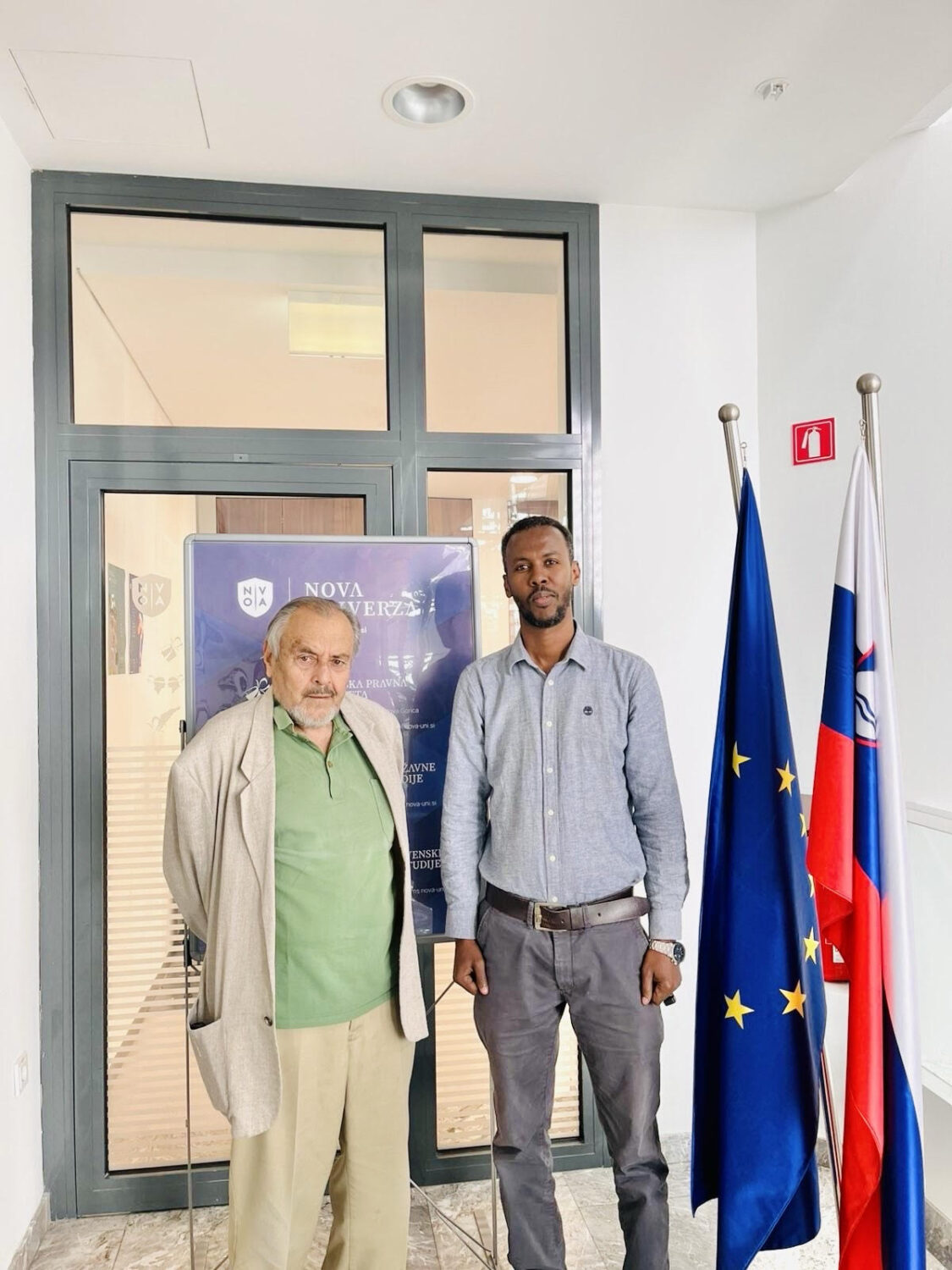
At the Faculty of Government and European Studies, New University, we are proud to host a diverse and globally-minded group of students. One of them is ABDISHAKUR Hassan-kayd, a PhD student from the Horn of Africa, whose research is illuminating the complex legal and political status of Somaliland, a de jure state that opted for an unratified union with Somalia in 1960, dissolved that union in 1991, yet the world still ignores it.
His work is not only academically relevant but also deeply personal – a call for international discussion to respect international laws, historical realisms, and acceptance of the realities on the ground. We asked Abdishakur a few questions about his research, his journey to Slovenia, and his experience at our Faculty.
🌍1. What inspired you to pursue your PhD studies in Slovenia, and specifically at the New University’s Faculty of Government and European Studies?
When I saw the program’s ad and the joint institutions involved, I thought it was a great combination, combining diplomatic studies with a security focus. Although security was already part of my expertise, I was drawn to the diplomacy and foreign affairs aspects, which aligned with my desired career goals of serving my people. Having earned my previous degrees from institutions in Africa and the USA, I viewed the joint PhD from European and Middle Eastern institutions as ideal, as it allowed me to claim a global citizen status, having studied on multiple continents.
🧠2. Can you briefly introduce the main focus of your doctoral dissertation?
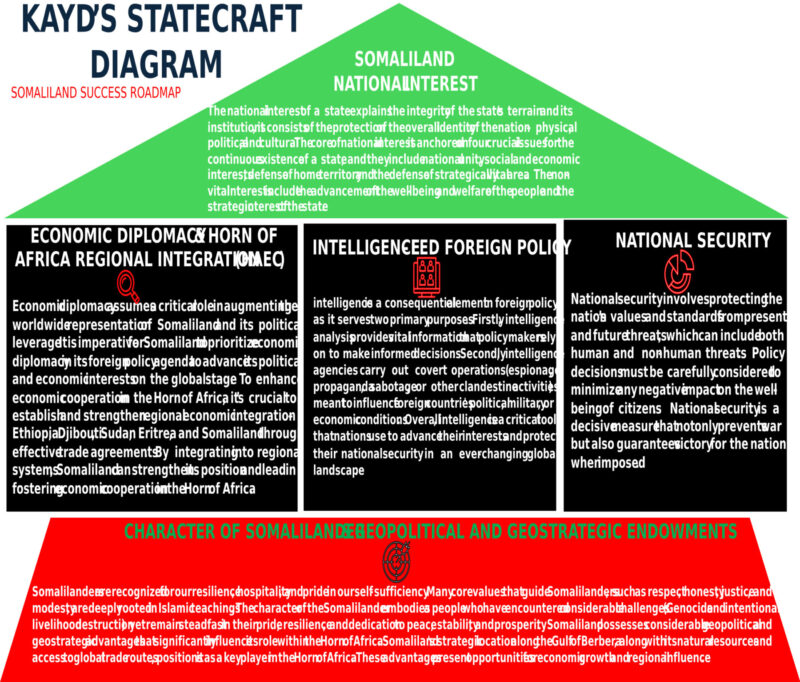
My doctoral dissertation topic is “SOMALILAND INTELLIGENCE AND FOREIGN POLICY: A Comparative Analysis on Somaliland’s Intelligence and Foreign Policy and its Ensuing Effects on Strengthening National and Horn of Africa Regional Security” written under the mentorship of prof. dr. Ernest Petrič.
⚖️3. How does your research contribute to understanding international law and state formation in unrecognized regions?
While my country is not a new state, it was established on internationally recognized borders through treaties such as the Anglo-French Treaty of 1888, the British-Italian Protocol between 1891 and 1894, and the Anglo-Ethiopian Treaty of 1897. It gained treaty-based independence from Great Britain on June 26, 1960, the same day as the Republic of Madagascar, formerly known as the Malagasy Republic. Unfortunately, there is a widespread misconception regarding our situation; many believe we are part of Somalia and are attempting to separate from it. In truth, Somaliland was never a part of Somalia. The two only engaged in an unratified union that ultimately failed and led to bloodshed. We have not separated or succeeded; rather, we have reclaimed our rightful place in the international community. Chapter 3 of my dissertation examines our case through the lens of international law, addressing principles such as self-determination, territorial integrity, succession, separation, and the challenges of unsuccessful decolonization. This exploration aims to clarify Somaliland’s de jure status, which it has maintained but has been obscured by misinformation and the state failure of our former partner, Somalia.
🚧 4. What are the biggest legal or political challenges that Somaliland faces on its path to international recognition?
Instead of recognition, I prefer re-recognition. We’ve already been recognized by 34 other countries following the British independence treaty on 26 June 1960, and none of them has withdrawn recognition to date. The challenges we are facing are multifaceted. Our people have been indoctrinated with false narratives about our history. Our successive governments also haven’t mastered the art of legal diplomacy to pursue what is rightfully ours. Without naming specific nations, I would like to point out that several have been working against our case and contributing to misconceptions and continue to do so. I’m confident that their interests in the Horn of Africa region will ultimately fade, leading them to believe that hiding Somaliland’s existence will help them reach their goals.
🎯5. How do your studies at the New University help you shape your academic and professional goals in this field?
In a few words, I can say it has already ignited the talents I was born with. Coming from a political family involved in my country’s governance since the Somaliland British Protectorate, my studies at this university became a clarion call to duty, as I realized the vast energy I could offer to my people. That call led me to serve for one year as a senior security advisor to the Minister at the Somaliland Ministry of Foreign Affairs. I have also tried to contribute to strengthening my nation’s security apparatus and will continue to do so while I can. I also established the MAAN Institute for Diplomacy and Global Affairs to serve further. (MAAN is an abbreviation of the names of four diplomats who served my people; I named the institute to honor them and to train those who could follow in their footsteps.)
🤝6. What would you say to other international students who are considering studying at the Faculty of Government and European Studies?
While it’s possible to find similar courses at various universities, the unique combination of academic credentials and practical expertise of my professors sets this program apart from other institutions I’ve attended. The candidates permitted into the program were also accomplished professionals in the fields of diplomacy and security. This PhD program offered exceptional exposure and provided me with the opportunity to connect with colleagues in the sector. Within my cohort, I studied alongside fellow African Ambassadors from Kenya and Uganda, Generals from Rwanda, Tanzania, and Nigeria, Colonels from Ghana and Senegal, advisors to Foreign Ministers from Liberia, and myself from Somaliland, as well as a commandant from a Police Academy in Malawi.
✍️7. How long is your current stay in Slovenia, and what has your experience been like so far?
This is my second visit to the Faculty; my first visit to Slovenia was in late 2022, but it was very short, and I returned quickly. However, this time I stayed longer to ensure I finish the dissertation and write five academic articles and other materials that I intend to publish soon. So far, my experience has been great; the environment is pleasant, and I have already submitted two of the academic articles to the journals where I plan to publish. The remaining three articles and the dissertation will also be submitted by the end of June, as planned.
🌟8. Finally, what are your hopes for the future of Somaliland – and for your own role in that process?
The future of my country is bright. I see no one can ignore reality, and respecting international law will be the final solution. However, my country’s strategies to approach this goal are consistently self-sabotaging, while political manipulations mislead greedy politicians who fail to use law-based diplomacy. In my dissertation, I propose a solution that I argue, if my country adopts it, will reverse the misconception and enable us to play the active role our ancestors played in ancient global trade and relationships. I hope to make significant contributions toward a viable and strong Republic of Somaliland, where creativity and innovation are prioritized to prepare our nation for adaptability in this rapidly changing environment.